Getting a Contraceptive Implant (Nexplanon®)
Getting a contraceptive implant (Nexplanon®) at Columbia Health? Here’s what you need to know before, during, and after your appointment.
What is Nexplanon®?
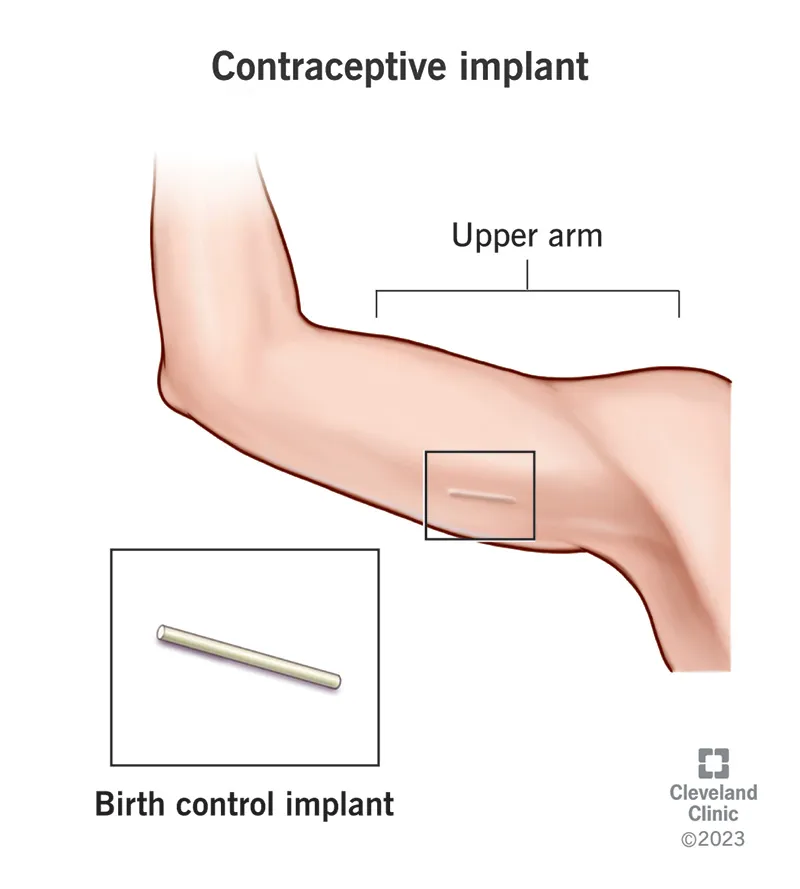
Nexplanon® is a hormonal implant and is a long-acting, reversible contraceptive method (LARC). It is a small rod about the size of a matchstick inserted under the skin on the inner side of the upper arm. It must be inserted by a healthcare provider. The rod contains 68 mg of etonogestrel (progestin, a hormone) that is released slowly. The hormone prevents pregnancy by keeping the ovaries from releasing eggs (so they cannot be fertilized by sperm); thickening cervical mucus, making it difficult for sperm to enter the uterus; and changing the lining of the uterus to prevent any fertilized eggs from attaching to the uterine wall. The implant is over 99% effective and FDA approved to prevent pregnancy for up to 5 years. Most people will experience frequent spotting and period changes. This could mean longer periods, shorter periods, or no bleeding at all. Removal and/or replacement requires another visit to a healthcare provider.
Before Your Insertion Visit
- Before your implant insertion visit with a medical provider, you can attend an in-person or virtual LARC Visit (part of Alice!’s Sexual & Reproductive Health Visits) with a GHAP Advocate to learn more, look at a model implant, and talk about the insertion process. Schedule a LARC Visit by filling out the LARC Intake Form.
- How much will it cost?
- Columbia Student Health Insurance (Aetna): getting an Implant is FREE!
- Private insurance: you will pay upfront at your insertion visit (~$1000) then ask your insurance provider to reimburse you. You can contact your insurance plan for a specific estimate of the expected upfront cost.
- Removal: Removal is free if you have paid the full-time Health and Related Services Fee, regardless of your insurance status.
- During your LARC Visit, a staff member can schedule you for an Insertion Visit at Medical Services to have the implant inserted, should you wish. Medical Services offers Nexplanon®, the only commercially available implant in the U.S.
- If you are currently using hormonal contraception (e.g. the pill, patch, or ring), keep using it until your implant is inserted, and ask your provider/advocate about using it as your backup method for up to 7 days after insertion (see “During and After Insertion” below). If you are NOT using hormonal contraception, continue using condoms and ensure that they are being used correctly until 7 days after insertion.
The Day of Your Insertion Visit
- Make sure you have something to eat before your appointment
- Arrive 20 minutes early with a full bladder for a pregnancy test, as the implant cannot be inserted if you are pregnant.
During and After Insertion
The appointment will last about 30 minutes, and the insertion will take less than 5 minutes.
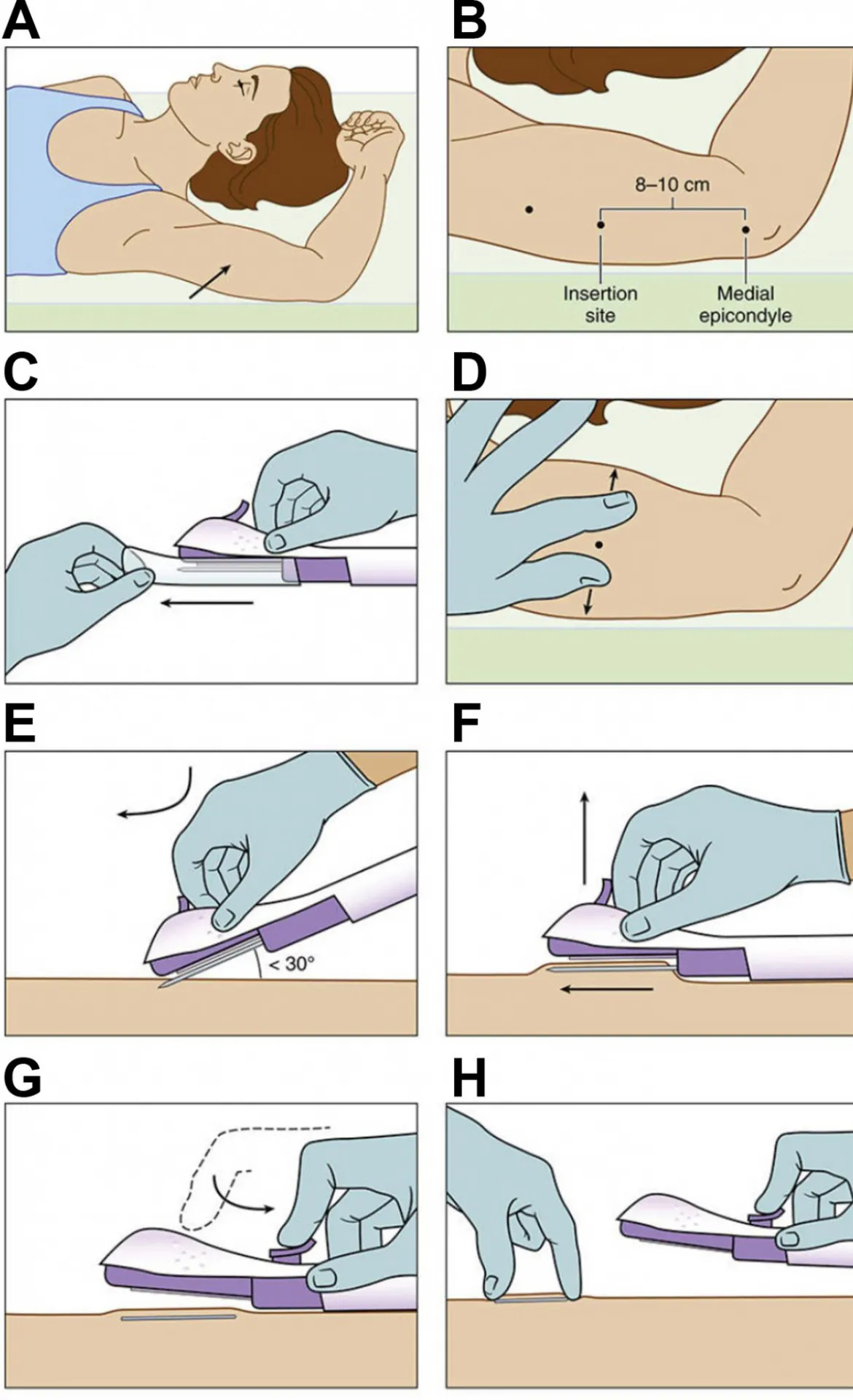
- You will lie down and place your non-dominant arm above your head.
- The provider will give you a shot of numbing medicine under the skin in your inner upper arm. While the numbing shot will sting and burn, you should not feel pain when the implant goes in.
- Once the area is numb, the provider will insert the implant under the skin of the upper arm using a special insertion tool (pictured below).
- Following insertion, the provider will cover the site where the implant was placed with two bandages. Leave the top bandage on for 24 hours, and keep the smaller bandage clean, dry, and in place for 3 to 5 days. Before you leave your insertion visit, your provider will have you feel for your implant. It is designed so that it isn’t easily visible but can be felt just underneath the skin. Over time, tissue forms around the rod after insertion, holding it in place.
Important Reminders and Side Effects
- Backup Method: You should use a backup method (condoms, pill, patch, ring) for 7 days after insertion.
- Recovery: You may experience bruising, soreness, and swelling following the insertion process. This is normal and usually goes away within two weeks.
- Side Effects: The most commonly reported side effect is changes in menstrual bleeding patterns (such as irregular, longer, or shorter periods, or spotting). Other possible side effects include mood swings, weight gain, headache, and acne. Some users may experience slight swelling at the site or a small scar once removed.
- Checking Your Implant: Following insertion, you can periodically check for the implant by placing your fingertips over the skin where the implant was placed. If you cannot feel the rod, contact your provider right away and use backup birth control in the meantime. If you have questions about how and when to check for the implant, ask a medical provider.
- Removal: To have the implant removed, contact Medical Services (212-854-7426). The provider will give you a shot of numbing medicine under the skin, then make a small incision in the skin near the tip of the rod to remove it. Natural fertility returns quickly -- ovulation can occur within 5 days once the rod is removed, and fertility typically returns to normal within 1 month.